
Jay Chase Tackles Fire-Station Resilience in Firehouse Magazine
July 2026
Lafayette, LA, July 16, 2026 – Jay Chase, AIA, NCARB, Principal at Chase Marshall Architects, explores firehouse resilience in his July 2026 Firehouse Magazine "Station" column, "Designing Firehouse Resilience from the Foundation Up." He explains why true resilience must be built in from the start, not added later.
Click here to read the full article to learn what it takes to build a station that is always ready.
The article examines a growing problem in the fire service: stations that meet code requirements yet still fail when disaster strikes.
Chase makes a clear point: a station that meets code can pass every inspection but still lose power when it matters most. Firefighters are prepared, but too often, the buildings are not.
The Resilience Crisis
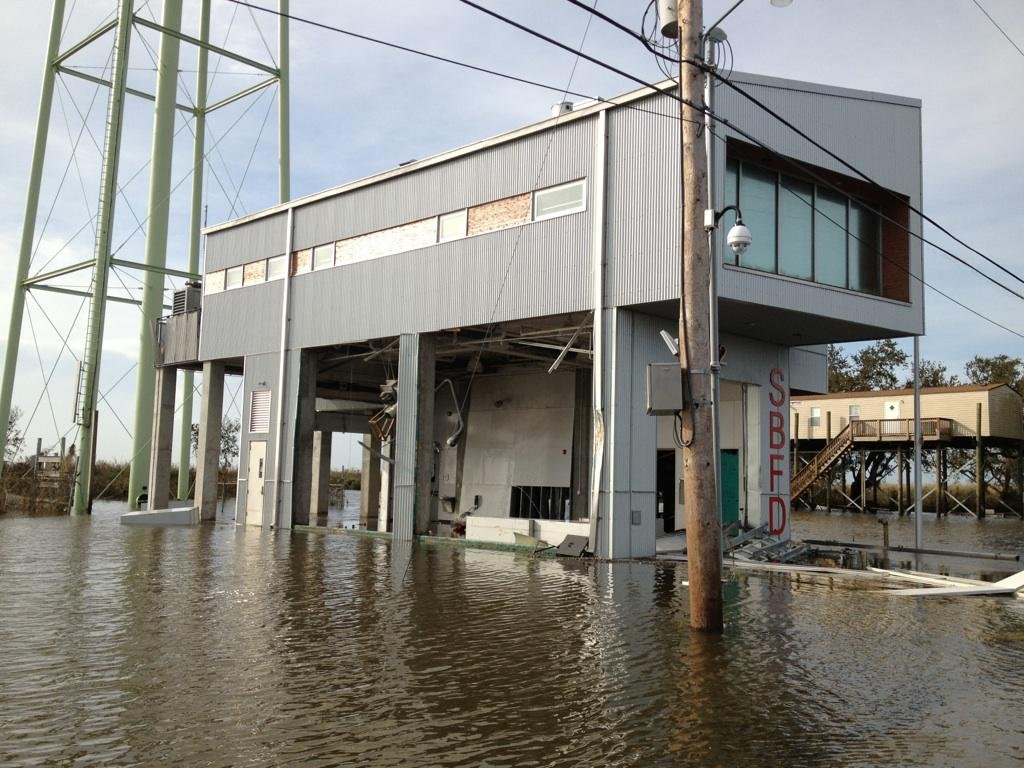
Chase begins the column by describing the morning after Hurricane Ida in 2021. Across southern Louisiana, crews were rested, equipped, and ready to work. But their stations failed. Generators stopped working because of water-contaminated fuel. Bay doors would not open. Radio antennas, designed for an earlier time, broke.
The column explains that FEMA, engineering standards groups, and architects now call this pattern the fire-station resilience crisis. It is a real, national issue, but so far, most of the discussion has stayed within the fire service.
Why Code Compliance Is Not Enough
For years, the standard approach to building stations was straightforward: build to current code, pass inspection, and hand over the keys. Chase argues that this method no longer works.
He explains that code minimums are based on past storms, floods, and earthquakes, not on what the next twenty years may bring. A building can be structurally safe but still unable to function.
Adding fixes after the fact does not solve the problem. For example, putting a new generator behind an old building or a strong door under a weak roof only creates the appearance of resilience. Chase’s main point is that resilience is a system, not just a feature, and it must be built in from the ground up.
Four Interlocking Domains
The column describes four areas that must work together to keep a station running. Each one is necessary, and none can work by itself.
Structural: Design to Risk Category IV standards, which are also used for hospitals and emergency operations centers. In coastal areas, this means bay doors built for high winds and foundations designed for local soil conditions.
Power, water, and operational systems: Use multiple backups, not just one. A utility connection, a generator with a 96-hour fuel supply, battery systems, and solar-plus-battery microgrids can keep a station running for several days.
Communications: Strengthen the systems crews rely on by adding radio backups, satellite options, and additional dispatch paths. If a station cannot hear dispatch, it cannot respond.
Community: Resilient stations also serve as emergency operations centers, shelters, and neighborhood hubs when the power is out.
The Evidence
Chase supports his argument with real-world data. After Hurricane Ida, stations with raised generators and at least 96 hours of fuel stayed operational 94 percent of the time. Stations built to standard codes stayed open only 61 percent of the time. The same storm hit the same area, but the buildings performed differently.
The column also discusses cost, which is a primary concern for many chiefs. Chase points out that federal grants favor projects with hazard analyses and long-term resilience plans. When avoided losses are considered, departments with strong resilience programs often find their real costs are much lower than the initial spending.
Gulf South Expertise
Chase Marshall Architects has extensive experience in this field. After Hurricane Katrina, Jay Chase dedicated much of his work to designing fire stations throughout the Gulf South. He partners with first-responder agencies to create buildings that can withstand storm surges and high winds, keep running when nearby infrastructure fails, and meet the needs of firefighters who live and work there every day.
The firm, with offices in Lafayette and New Orleans, builds stations that answer the bell as reliably as the crews who staff them.
Read the Full Column
Jay Chase's July 2026 "Station" column gives chiefs and facility planners a clear path forward, from basic hazard assessment to ongoing improvement.
Read the full column in Firehouse Magazine here: